
Cleanliness
Verification Testing
Cleanliness Verification Testing Services
A critical step in the precision cleaning process is cleanliness verification testing, which ensures that cleaned parts and components meet the determined cleanliness level as noted in the specification.
To ensure cleanliness, we verify levels using optical particle counters and gravimetric NVR equipment, photoionization detectors for solvent detection and dryness verification and digital dew-point meters for water dryness verification. Additionally, we use fume hoods, laminar flow hoods, and a complete wet chemistry laboratory for research and development which complements the cleaning and testing services.
Whether cleaning and confirming particulate levels, non-volatile residue levels, or other contamination limits, Astro Pak is expertly equipped to meet your precision cleaning and verification needs. We also routinely consult and perform projects that require highest cleanliness levels.
Testing Methods

Particle Count
Measures the number and size of particles remaining on the surface.

Non-Volatile Residue (NVR)
Measures the residues, which are mostly oils and greases, remaining on the cleaned surface.

Total Filterable Solids (TFS)
Measures the total mass, similar to a Particle Count, using the same precision analytical microbalance used in the NVR measurement.

Dewpoint
Detects trace amounts of moisture and quantifies them, allowing us to determine the exact state of dryness of the hardware, assuring that no excess moisture remains.

Solvent Removal
Assures that no solvent remains behind after the cleaning and contaminant extraction processes are completed.

UV Inspection
Certifies the residue cleanliness of a critical surface in instances where no fluid may touch the surface. It can also be used as a supplemental test.
| Level (μg/cm2 or μg/0.1cm3) | Former Designation Level | Maximum allowable NVR limit mass / 0.1 m2 or mass / 0.1 L |
|---|---|---|
| R1E-5 | AA5 | 10 ng |
| R2E-5 | AA4.7 | 20 ng |
| R5E-5 | AA4.3 | 50 ng |
| R1E-4 | AA4 | 100 ng |
| R2E-4 | AA3.7 | 200 ng |
| R5E-4 | AA3.3 | 500 ng |
| R1E-3 | AA3 | 1 μg |
| R2E-3 | AA2.7 | 2 μg |
| R5E-3 | AA2.3 | 5 μg |
| R1E-2 | A / 100 | 10 μg |
| R2E-2 | A / 50 | 20 μg |
| R5E-2 | A / 20 | 50 μg |
| R1E-1 | A / 10 | 100 μg |
| R2E-1 | A / 5 | 200 μg |
| R5E-1 | A / 2 | 500 μg |
| R1 | A | 1 mg |
| R2 | B | 2 mg |
| R3 | C | 3 mg |
| R4 | D | 4 mg |
| R5 | E | 5 mg |
| R7 | F | 7 mg |
| R10 | G | 10 mg |
| R15 | H | 15 mg |
| R25 | J | 25 mg |
| Maximum Particle Count per IEST-STD-CC1246E | ||||||||||
|---|---|---|---|---|---|---|---|---|---|---|
| min (μm) | max (μm) | 25 | 50 | 100 | 200 | 300 | 400 | 500 | 750 | 1000 |
| 5 | 15 | 19 | 141 | 1519 | ||||||
| 15 | 25 | 2 | 17 | 186 | 2949 | |||||
| 25 | 50 | 1 | 6 | 67 | 1069 | 6433 | ||||
| 50 | 100 | 0 | 1 | 9 | 154 | 926 | 3583 | 10716 | ||
| 100 | 250 | 0 | 0 | 1 |
15
(Note 3) |
92 | 359 | 1073 | 8704 | |
| 250 | 500 | 0 | 0 | 0 | 0 |
2
(Note 3) |
8
(Note 3) |
25 | 205 | 983 |
| 500 | 750 | 0 | 0 | 0 | 0 | 0 | 0 | 1 | 7 | 33 |
| 750 | 1000 | 0 | 0 | 0 | 0 | 0 | 0 | 0 | 1 | 3 |
| 1000 | 1250 | 0 | 0 | 0 | 0 | 0 | 0 | 0 | 0 | 1 |
specifications
Below are just some of the many specifications that we can process to:
- 1P00070
- 1P00071
- 1V43902
- 5-75059 (Nitric Solution A)
- 5-75190
- 5-75192
- 5-75194
- ACS-PRS-2252
- AIC STD 4940
- AMS 2700 (Method 1 Type 6)
- AMS-QQ-P-35 (Type VI)
- AS4059
- ASML GSA 07 4320
- ASTM A380
- ASTM A967-13 Practices D, E, F
- ASTM F-311, F-312, F-331
- ASTM F86
- ASTM G93
- ASTM G131-96
- ATC-STD-4940
- BAC 5763 and 5402
- CGA G-4.1 (Compressed Gas Association)
- CMSP-0229
- CMSP-02291
- CMSP-02292
- GS-38
- HBPS-06-009
- IEST-STD-CC1246
- ISO 14952-2/14952-3
- ISO-9001
- JDS-G169
- JPR 5322.1
- K-143
- KSC-C-123
- LMA PG006
- LMA-XXX
-
MAP-211025-9930
(CA Cleanroom only) - MIL-STD-1246
- MIL-STD-419D
- MSFC-SPEC-164
- P1001
- PR2-2
- PR2-22
- PRC-5001
- PS17009.7
- QSS 0081, QSS 0082
- RAPWA80
- RAPWA80-81
- RA0110-018, RA1110-025
- RA0110-018, RA1110-025
- RA0110-046, RA0110-047, RA0110-049
- RA1110-003, RA1110-022
- RA1610 Series (002, 004, 064, 065, 074, 353, 401)
- RA321270
- RAPWA80
- RAPWA80-81
- RAPWA36180, RAPWASP36180
- RL-XXX
- RL10001, RL10012
- RPTSTD-8070-0001
- SAE AMS-2700
- SAE AMS-QQ-P-35
- SAE ARP 1176
- SC-11
- SCGPS-56044
- SEMI F19-0304
- SEMI F19-95
- SN-C-0005
- SPX-00006876
- SPX-00007918
- SPX 0002183
- SAE AMS-QQ-P-35
- SAE ARP 1176
- SC-11
- SCGPS-56044
- SEMI F19-0304
- SEMI F19-95
- SN-C-0005
- SPX-00006876
- SPX-00007918
- SPX 0002183
- SPX-00008185
- SPX-00021833
- SSTD-8070-0089-FLUIDS
- STP-0407
- STP 0413
- STP-0565
- STP-0637
- STP-1012
- Over 100+ industry, government, and individual company specifications!
Medical Device
SPACE
Biotech
Aircraft
semiconductor
accreditations
Astro Pak has cleaned hardware and components for almost every cleanliness critical industry and application since 1959. Our studies have shown that the chrome to iron ratios achieved by our Ultra Pass® passivation far exceeds ASME BPE recommended minimums and meets or exceeds the requirements of many industries including pharmaceutical, biotechnology, space and semiconductor. Some of the world’s most prestigious institutions including JPL, Lawrence Livermore National Laboratory, MIT, and Cal-Tech have sought guidance and consultation from our subject matter experts. For cleanliness critical components our Cleanroom Services locations are ITAR certified and feature ISO 14644-1 certified Class 5, 6, or 7 cleanrooms and labs of varying sizes and capabilities. We also house an extensive library of approved procedures and meet the standards and specifications set forth by both industry regulatory bodies and private organizations. Our Cleanroom Services locations maintain AS9100 certified Quality Management Systems.
Coast to Coast Facilities
Astro Pak offers coast-to-coast Cleanroom Services facilities, featuring ISO 14644-1 certified Class 5, 6, and 7 cleanrooms and labs of various sizes and capabilities. These highly controlled environments support processes such as ultrasonic cleaning, pressure and cold shock testing, clean assembly, vacuum-sealed packaging, and cleanliness verification for particle count, TFS, and NVR. Additionally, our Cleanroom Services locations maintain AS9100 certified Quality Management Systems.
Downey, CA

Our California Cleanroom houses three large ultrasonic cleaning units (8’L x 3’W x 3’H). One of the highlights of this facility is the a 21,222 cubic ft Large Component Cleanroom that features a 26’x15’ high-speed roll up door, 18′ ceilings, 2,500 psi high pressure spray system and two-ton overhead bridge crane to accommodate large hardware.
Titusville, FL

Located just outside the Kennedy Space Center, Astro Pak’s 38,000 sq. ft. Space Coast facility houses three L-Shaped Tanks (22’L x 3’W x 4’H by 3’L x 2’W x 4’H). The highlight of this facility is the 15’x15’ enclosed tower (70’ vertical) which enables the processing of convoluted hoses up to 60’ in length indoors in a vertical orientation.
News
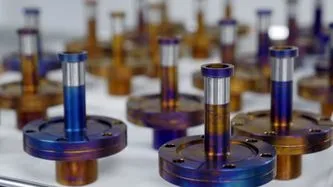
Astro Pak Preps for Mars 2020
NASA’s upcoming Mars 2020 mission plans to build on the discoveries made by previous rovers and landers on the surface of Mars. The rover, based

Astro Pak Supports the Search for Dark Matter – The LZ Dark Matter Experiment
Astro Pak is applying its internationally-renowned precision cleaning and surface treatment skills to the search for the mysterious dark matter. Although it has not been directly seen,

Astro Pak Corporation Plays Critical Role In Supporting LIGO
Astro Pak plays critical role in supporting LIGO, confirming Einstein’s Theory of Relativity and detecting evidence of Gravitational Waves. In February 2016, LIGO (twin Laser
Frequently Asked Questions
Cleanliness verification testing is a critical process that ensures cleaned parts and components meet the specified cleanliness levels. This involves using advanced equipment such as optical particle counters, gravimetric NVR equipment, photoionization detectors, and digital dew-point meters to verify the cleanliness of parts. The goal is to meet or exceed the standards set in specifications such as the IEST STD CC1246E Specification.
The types of contaminants tested in cleanliness verification include particulate matter, non-volatile residues (NVR), total filterable solids (TFS), moisture, and solvents. Each of these contaminants is measured using specialized equipment to ensure that all components meet the required cleanliness levels.
Particulate cleanliness is measured using particle counters that count and size the particles remaining on a surface. The data is compared against the maximum allowable particle counts specified in standards like the IEST-STD-CC1246E Level.
Non-volatile residue (NVR) testing measures residues, mainly oils and greases, that remain on a cleaned surface. The residues are quantified using a precision analytical microbalance to ensure they do not exceed the specified limits.
Dryness verification is performed using digital dew-point meters to detect and quantify trace amounts of moisture, ensuring that no excess moisture remains.
Solvent detection is conducted using photoionization detectors, which ensure that no solvents remain after the cleaning process. Additionally, ultraviolet light inspection is used to certify residue cleanliness without fluid contact and as a supplemental test.
Yes, customers are welcome to come onsite and assemble their own parts after they have been cleaned. This ensures that they have complete control over the assembly process and can verify the cleanliness of their components firsthand.
Astro Pak’s two state-of-the-art cleanrooms, strategically located in California and Florida, feature ISO 14644-1 certified Class 5, 6, or 7 cleanrooms and labs of varying sizes and capabilities. Our Cleanroom Services locations maintain AS9100 certified Quality Management Systems.