
Biofilms are not passive contamination layers. They are living, adaptive microbial systems that evolve specifically to survive chemical, thermal, and hydraulic challenges. In high-purity water systems, these survival mechanisms make eradication far more difficult than traditional sanitization models assume. Understanding how biofilms form, communicate, and adapt is essential to explaining why remediation often requires aggressive, multi-modal strategies rather than isolated cleaning events.
Biofilms Are Living Systems, Not Surface Residues
Biofilms form when free-floating bacteria adhere to a surface and transition into a sessile state. Initial attachment can occur within seconds, followed by irreversible adhesion. Once attached, bacteria divide rapidly and begin coordinated behavior.
Unlike planktonic bacteria, biofilms behave as organized communities. Their structure, metabolism, and defense mechanisms evolve continuously in response to environmental stress. This adaptive behavior is the primary reason biofilms persist despite repeated cleaning attempts.
Established biofilms differ from transient microbial contamination in several fundamental ways:
- They develop structured, three-dimensional architecture.
- They produce a protective extracellular polymeric matrix, which provides protection against common sanitization agents.
- They regulate gene expression collectively, allowing bacteria to respond to threats as a single community instead of as individual units.
- They continuously release organisms that colonize downstream surfaces.
These characteristics make established biofilms structurally and functionally distinct from planktonic contamination.
Biofilm Life Cycle and the Impact of Maturity
Early-Stage Biofilms
Early biofilms are typically dominated by a single bacterial species. They occupy smaller surface areas and remain more susceptible to disruption and chemical attack.
Laboratory results showing a single organism often indicate early colonization, where eradication is more achievable because structural defenses and cooperative survival mechanisms are not yet fully developed.
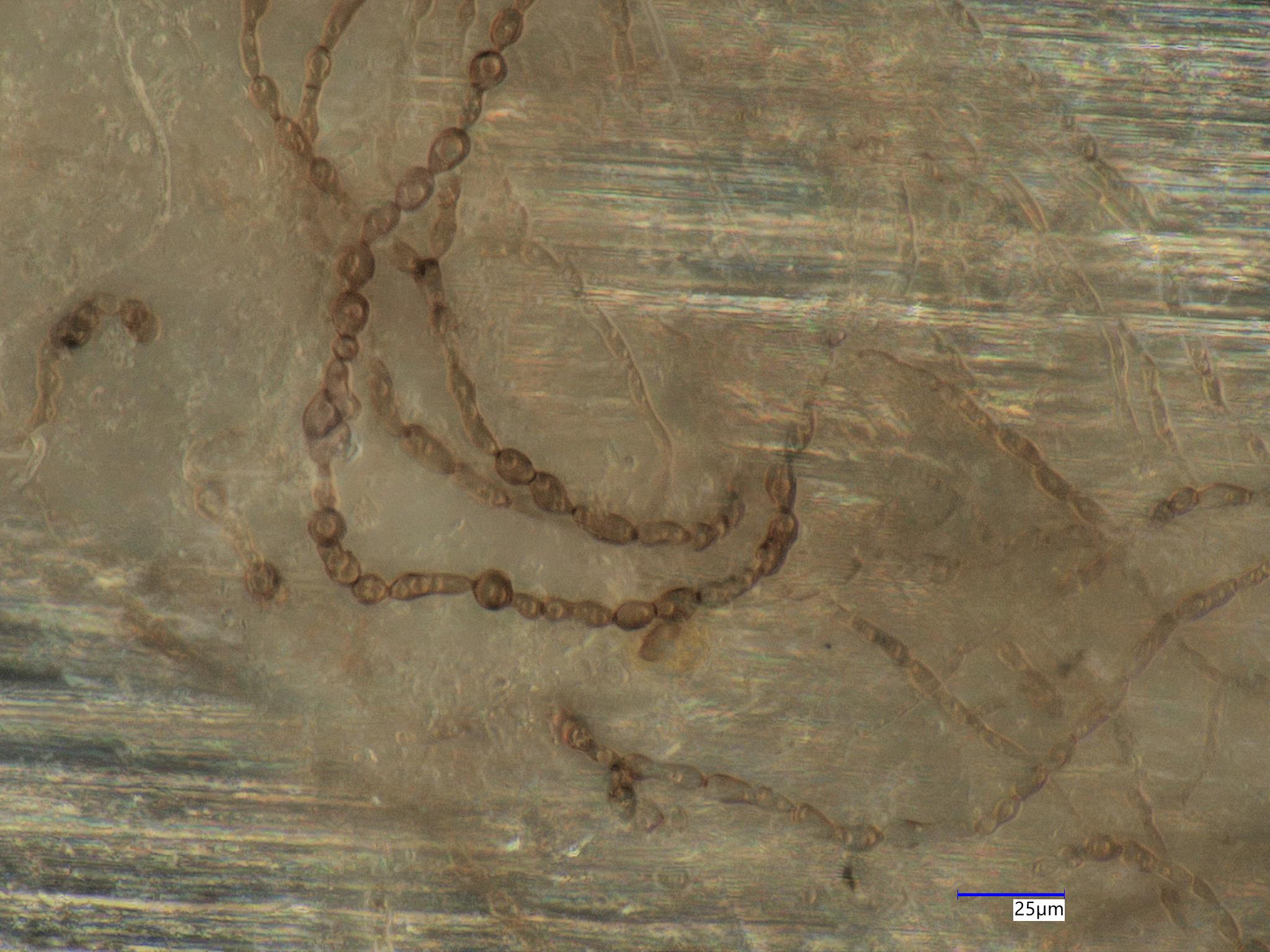
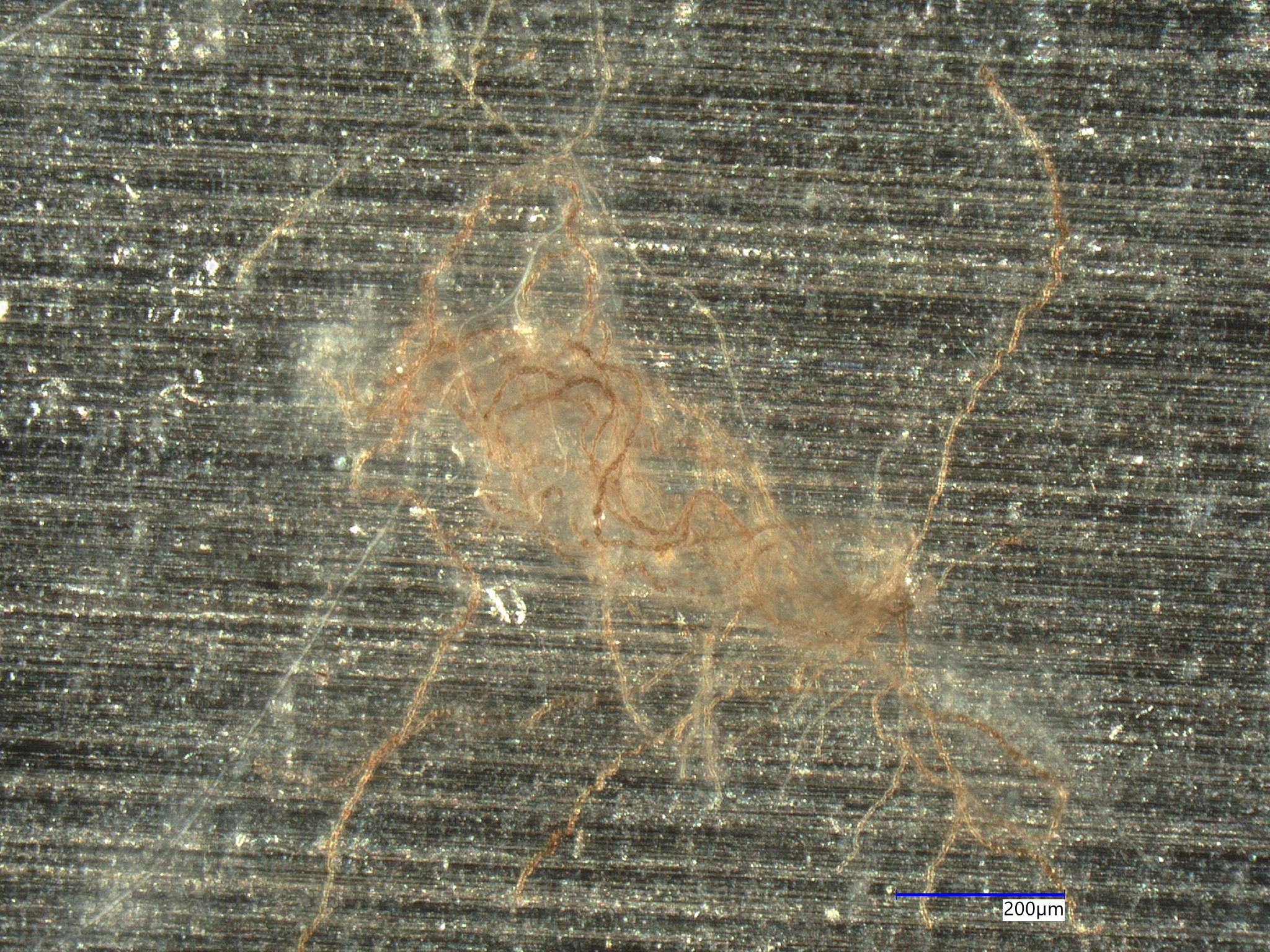
The laboratory images below were grown and photographed by Astro Pak’s Research & Development laboratory and demonstrate the structural development of mature biofilms discussed throughout this article.
Mature Biofilms
As biofilms mature, secondary colonization occurs. Additional bacterial species are attracted to the environment created by the original colonizer and may utilize its metabolic byproducts as nutrients.
Mature biofilms exhibit expanded surface coverage, colonization of non-contiguous downstream areas, and greater species diversity. Cooperative survival behavior expands resistance mechanisms, allowing bacterial organisms with differing chemical tolerances to persist within shared structural protection.
Once secondary colonization is established, eradication becomes significantly more difficult.

The Glycocalyx Slime Layer as Structural Infrastructure
The defining feature of a biofilm is the glycocalyx slime layer. This matrix consists primarily of polysaccharides with embedded proteins and extracellular genetic material.
The glycocalyx is not a random accumulation. It functions as structural infrastructure that provides protection from chemical exposure and temperature fluctuations while maintaining strong adhesion within the biofilm and to external surfaces under flowing conditions. Internal channel networks distribute nutrients and remove metabolic waste. Micro-environments form within the matrix, allowing multiple bacterial species to coexist.
In addition, filamentous streamers may develop and detach, seeding downstream colonization sites. Because the matrix functions as both barrier and transport network, simple surface sanitization rarely eliminates a mature biofilm.
Nutrient Concentration in High-Purity Environments
High-purity water systems such as DI, RO, USP, and WFI environments contain extremely low nutrient levels. However, biofilms exploit trace contaminants present at parts-per-billion or parts-per-trillion concentrations.
The glycocalyx matrix absorbs and concentrates these trace nutrients into usable quantities. As a result, biofilms persist in environments that appear biologically inhospitable when evaluated solely by conductivity or TOC measurements.
Low conductivity does not eliminate microbial risk, and acceptable TOC values do not confirm the absence of structured surface-attached growth. Nutrient scarcity alone is insufficient to prevent biofilm development.
Bacterial Communication Through Quorum Sensing
Biofilm bacteria communicate using chemical signaling molecules in a process known as quorum sensing. As population density increases, signaling molecules accumulate and trigger coordinated gene expression across the colony once threshold concentrations are reached.
Through quorum sensing, biofilms regulate growth rates, maintain internal channel architecture, modify gene expression in response to chemical exposure, and coordinate colony-wide stress responses. This coordinated behavior allows biofilms to function as a unified biological system rather than isolated cells, increasing survival probability under adverse conditions.
Genetic Adaptation Through Plasmid Exchange
Biofilms facilitate horizontal genetic exchange through plasmid transfer between bacteria. This exchange may occur between organisms of the same species or across species boundaries.
Transferred genetic material can increase resistance to cleaning chemistries, enhance extracellular matrix production, expand metabolic capability to utilize additional substrates, and improve tolerance to environmental stress. This adaptive flexibility enables biofilms to respond rapidly to remediation efforts, even when prior treatments were temporarily effective.
Why Partial Removal Often Leads to Regrowth
Once maturity is reached, biofilm dispersion becomes continuous. Portions of the biofilm detach and travel downstream, seeding new colonization sites.
If remediation does not eliminate nearly the entire viable population, several consequences typically follow:
- Surviving organisms rapidly recolonize exposed surfaces.
- Well-adapted bacteria may dominate subsequent growth cycles.
- Colonization may appear in previously unaffected areas.
- Resistance characteristics may differ from initial laboratory findings.
Implications for Biofilm Remediation Strategy
Biofilm eradication is a system-level challenge rather than a surface-cleaning task. Effective remediation requires alignment between laboratory data, chemical selection, system material types, process execution, and post-treatment verification.
Species identification, system geometry, understanding of prior chemical exposure, and chemical strategies capable of penetrating protective layers must be integrated into a coordinated plan. Ongoing interpretation of analytical results by experienced personnel is necessary to evaluate treatment effectiveness and detect early signs of recurrence.
Treating biofilms as static contamination rather than adaptive biological systems increases the likelihood of remediation failure.
Conclusion
Biofilms persist because they are structurally and biologically adapted to survive. Their architectural complexity, communication systems, and genetic adaptability allow them to withstand conditions that eliminate free-floating bacteria. In high-purity water systems, these mechanisms explain why eradication requires informed, coordinated, and technically grounded strategies rather than isolated cleaning events.
Frequently Asked Questions
A biofilm is a structured community of microorganisms attached to a surface and embedded within a protective extracellular matrix. In DI, RO, USP, and WFI systems, biofilms can form on internal piping and vessels, even when trace nutrients are present. Unlike planktonic bacteria, biofilms function as coordinated, adaptive systems.
Biofilms are protected by a glycocalyx matrix that limits chemical penetration. As biofilms mature, they develop greater structural density, species diversity, and adaptive resistance mechanisms, making eradication significantly more complex than routine sanitization.
Yes. Biofilms can concentrate trace organic material present at extremely low levels. Acceptable conductivity and TOC values do not confirm the absence of surface-attached microbial growth.
Mature biofilms continuously disperse viable organisms downstream. If remediation does not eliminate nearly the entire population, surviving organisms can rapidly recolonize and may exhibit increased resistance due to prior chemical exposure.
Species identification and population trends help determine biofilm maturity and resistance potential. Accurate laboratory data supports appropriate selection of mechanical and chemical remediation strategies.


